
A focus on community.
Idaho residents are leading the charge to breathe new life into our downtowns and neighborhood business districts by following the principles of the Main Street program. Main Street is a national movement that guides communities as they work to revitalize their downtowns, sparking their local economies while they restore culturally and historically significant resources in these areas.
Main Street programs can be implemented in towns and cities of any size. Commercial districts taking part in the Main Street program across the nation have generated more than $53 billion in new investment, with a net gain of more than 448,000 new jobs and 104,961 new businesses. Nationally, more than 200,000 buildings have been restored and renovated.
Idaho’s Main Street Program
Idaho has adopted a statewide Main Street program, which means we serve as the bridge between your community and the national program. We can help pool resources statewide and provide Main Street designation and accreditation. Idaho Commerce also assists rural communities that don’t have the resources to implement a program on their own, and we track program successes, so we can celebrate our communities’ achievements.
How does a community become a Main Street America member?
Communities interested in joining the Main Street movement can become members of Main Street America by selecting the membership level that best fits their needs. Membership is open to communities, organizations, municipalities, and individuals interested in downtown revitalization.
- A General Membership is a great starting point for communities building their revitalization efforts and costs $295 annually.
- Communities that have achieved Affiliate or Accredited Main Street status may join as Main Street America Community Members, which costs $375 annually.
Membership provides access to a national network of downtown professionals, training opportunities, the Main Street Knowledge Hub, revitalization resources, peer-to-peer learning, networking opportunities, conference and academy discounts, and tools to support successful downtown programs. Membership helps communities connect with proven strategies, share ideas with other revitalization leaders, and strengthen their local Main Street efforts. More details can be found here.
Use the resources below to explore the Main Street program.
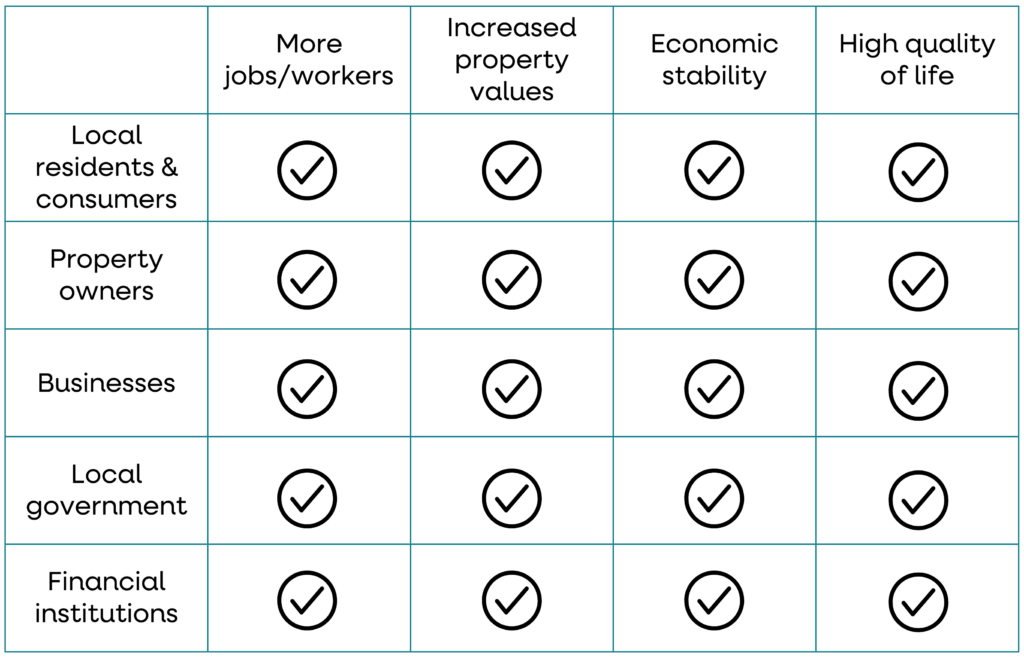
Benefits of Main Street
Four-Point Approach
The Main Street America Four-Point Approach® is a comprehensive framework used by communities to revitalize historic downtowns and commercial districts. It recognizes that successful downtown revitalization requires a balanced focus on organization, economic vitality, design, and promotion:
- Organization: Build a strong foundation for revitalization by bringing partners together, creating sustainable leadership, developing resources, and coordinating efforts among businesses, residents, local government, and community organizations.
- Economic Vitality: Strengthen the local economy by supporting businesses, attracting investment, encouraging entrepreneurship, filling vacant buildings, and creating a diverse and resilient downtown economy.
- Design: Enhance the appearance, function, and character of the downtown through thoughtful planning, historic preservation, public spaces, building improvements, and creating an inviting environment.
- Promotion: Market and celebrate the downtown by highlighting local businesses, events, culture, and community assets to attract visitors, customers, and investment.
Together, the Four Points provide a balanced approach that helps communities create vibrant, welcoming, and economically healthy downtowns while preserving their unique character.
Dive deeper into the four points here.
Eight Guiding Principles
The Eight Guiding Principles of Main Street America® are the foundation of the Main Street Approach. They help communities ensure their downtown revitalization efforts are comprehensive, sustainable, and locally driven.
- Comprehensive: Successful revitalization requires a broad approach that addresses all aspects of downtown health — including economic development, design, promotion, and community organization.
- Incremental: Revitalization happens over time. Communities achieve lasting change through small, achievable steps that build momentum and demonstrate success.
- Community-driven: Local people are at the center of the process. Successful Main Street programs are guided by residents, businesses, property owners, volunteers, and community leaders.
- Public-private partnerships: Strong partnerships between local government, businesses, nonprofits, and community organizations create the resources and support needed for success.
- Identifying existing assets: Communities build on what they already have; local businesses, historic buildings, culture, traditions, natural resources, and community strengths — rather than trying to become something they are not.
- Quality: Successful programs focus on high-quality planning, projects, events, and improvements that create lasting value and reflect community pride.
- Changing attitudes: Revitalization requires shifting perceptions about downtowns, helping people see opportunities, celebrate successes, and build confidence in their community’s future.
- Implementation-oriented: Main Street is focused on action. Communities develop realistic strategies and follow through with projects, programs, and activities that create measurable results.
Frequently Asked Questions
What is Main Street?
Main Street is a proven approach to downtown and commercial district revitalization that helps communities strengthen their local economies, preserve historic character, and create vibrant places where people want to live, work, and visit. The Main Street model provides communities with tools, training, and resources to support long-term downtown success.
What is the Idaho Main Street program?
The Idaho Main Street Program supports communities across the state in revitalizing their downtowns and commercial districts. Through technical assistance, training, resources, and partnerships, the program helps communities implement proven revitalization strategies that strengthen local economies and enhance quality of life.
Who can participate in Idaho Main Street?
Idaho Main Street is designed to support communities of all sizes that are committed to downtown revitalization. Cities, downtown organizations, chambers of commerce, economic development organizations, local governments, and community volunteers can all play an important role in Main Street efforts.
What is the Main Street Approach?
The Main Street Approach is a comprehensive framework for downtown revitalization built around four interconnected areas of work:
- Organization – Building strong partnerships and leadership
- Economic Vitality – Strengthening businesses and creating economic opportunities
- Design – Improving the appearance, function, and character of downtown
- Promotion – Marketing downtown assets, events, and businesses
Why should a community have a Main Street program?
A Main Street program helps communities:
- Strengthen small businesses and support entrepreneurs
- Attract investment and increase economic activity
- Revitalize vacant and underused buildings
- Preserve historic buildings and community character
- Create vibrant public spaces and community events
- Build stronger partnerships among local leaders, businesses, and residents
Is Main Street only for historic downtowns?
No. While historic preservation is an important part of Main Street, the program focuses on the overall health and vitality of commercial districts. Main Street strategies can benefit historic downtowns, traditional business districts, neighborhood centers, and emerging commercial areas.
Does Main Street provide grants?
Main Street is not a direct grant program. Instead, it provides communities with training, technical assistance, best practices, and resources to help them identify opportunities, build capacity, and pursue funding from a variety of sources.
How does Main Street help small businesses?
Main Street supports small businesses by helping communities create stronger business environments through business recruitment and retention, downtown marketing, networking, training opportunities, improved public spaces, and strategies that increase foot traffic.
What role does the community play in Main Street?
Successful Main Street programs are community-driven. Local volunteers, businesses, residents, city leaders, and organizations all contribute by identifying priorities, supporting projects, participating in events, and helping carry out the community’s vision.
How long does it take to see results from a Main Street Program?
Downtown revitalization is a long-term effort. While communities may see early successes through events, façade improvements, business openings, or new partnerships, lasting change requires ongoing commitment and investment over time.
What types of projects can Main Street support?
Main Street communities work on a wide variety of projects, including:
- Downtown master planning
- Business recruitment and support
- Historic building rehabilitation
- Streetscape improvements
- Public art and placemaking
- Community events
- Marketing campaigns
- Leadership and volunteer development
How is Main Street different from traditional economic development?
Traditional economic development often focuses on business recruitment, jobs, and investment. Main Street takes a broader approach by combining economic development with community identity, historic preservation, design, and quality of place.
What is the benefit of being affiliated with Main Street America?
Communities affiliated with Main Street America receive access to national best practices, training, professional development, networking, and a proven revitalization framework that has been used successfully across the country.
How can my community get involved with Idaho Main Street?
Communities interested in learning more can contact the Idaho Main Street Program at Idaho Commerce to discuss opportunities, resources, and next steps for downtown revitalization.
How To Create a Main Street Program
Download Our How-To Guide
Learn more about how Main Street can work for your community with this overview and assessment guide. Please click here.
Apply for the Main Street Program
Would your downtown benefit from the Main Street program?
- Contact Jenny Hemly at Idaho Commerce about bringing the program to your community.