
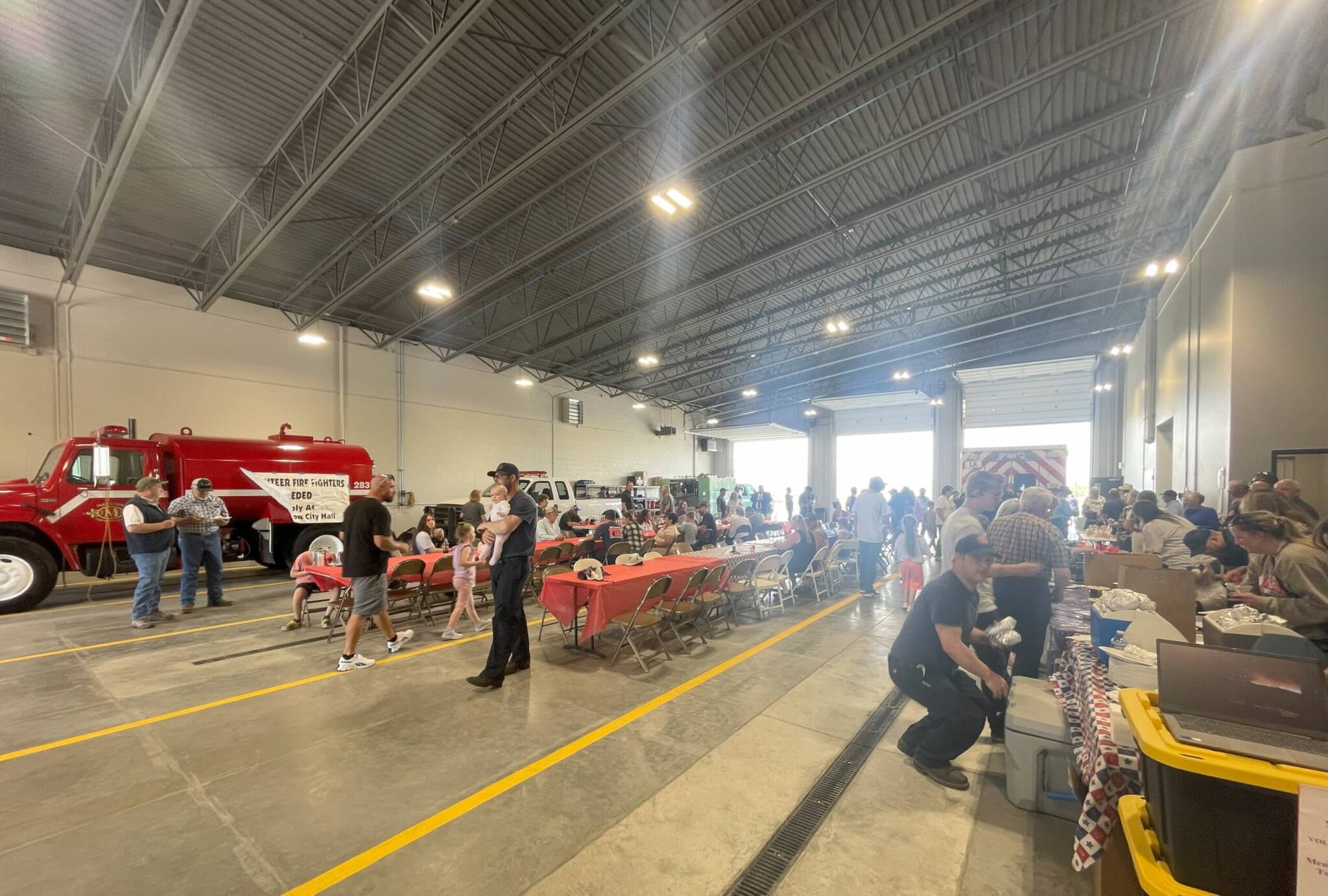
In May of this year, McCammon held a ribbon cutting on their new fire station facility, providing significant upgrades to the city and surrounding area’s critical public safety services.
The project, which had been in the works for more than five years, finally came to fruition thanks to the help of $500,000 in CDBG funding and $75,000 in RCIF funding, among other funding partners.
According to Krystal Denney, Community and Economic Development Director for Southeast Idaho Council of Governments (SICOG), who applied for the grant and served as a community coach and project manager, the project first started in 2018 when expanded emergency services emerged as a top priority for the city.
By 2021, the city successfully passed a bond and secured CDBG funding. In 2023, with financing from USDA Rural Development and partnerships with Bannock County and others, the project finally reached groundbreaking, and in 2025 the team held a ribbon cutting on the new facility. However, it was not without a few obstacles along the way.
“The project faced challenges including cost escalations during the pandemic that nearly quadrupled original estimates, but through strong partnerships, community persistence and creative financing, McCammon was able to move forward,” Denney said “The CDBG grant was a critical cornerstone in the overall funding package.”
Aaron Hunsaker, McCammon City Council President, also spearheaded this community project and helped to guide this project through its many phases. Hunsaker worked closely with SICOG to submit the CDBG application.
As the plans for the station were underway, additional community needs arose. Previously, the City of McCammon did not have access to an ambulance, let alone a volunteer ambulance crew and was facing a response time of up to 39 minutes in emergencies.
Thanks to the smart planning of Hunsaker, the city and the assistance of SICOG, McCammon has access not only to critical public safety resources like fire and ambulance, it also has a new home for its city offices, new council chambers and the Bannock County Sheriff’s Office.
Both Hunsaker and Denney said that without CDBG funding and assistance from partners across the state, this project, and its critical services, would never have been possible.
“It just is another reminder of why these funds are so important for these communities,” Hunsaker said.
“The new fire station dramatically improves public health and safety for McCammon residents and businesses,” Denney said. “It strengthens emergency response, provides firefighters with proper facilities and ensures the community is prepared for growth and future challenges. Beyond safety, the project also represents a symbol of community resilience. It shows that even a small rural town can take on a major, complex project when people come together, persist through setbacks and leverage every available resource.”
Denney added that the flexible, need-based approach to CDBG funding is why it is a critical funding source to Idaho’s rural communities.
“It offers the chance to make transformational projects possible — whether that is a fire station, water system, or community center,” Denney said. “CDBG also requires transparency and public involvement, which means the projects funded are truly community-driven.”
This story was reposted from the FY2025 Annual Report. Read the full report here.